Hamilton Cams 188/220 Street / Race Cast Cam 89-18 Dodge 5.9L / 6.7L Cummins
If you're looking to broaden your power band and make better use of the larger turbo(s) you've installed, nothing stands up to the Hamilton 188-220 drop in cam.
This cam has outperformed any cam Hamilton has tested it against to date, from idle to 4,200 rpm. It is also the largest drop-in cam that they build. This cam will help to eliminate any turbo lag that is created from running larger turbos, and makes the truck significantly more streetable.
CAST IRON VS STEEL CAMSHAFT COMPARISON:
When it comes to valvetrain performance and long-term reliability, steel camshafts offer clear advantages over traditional cast iron designs. Steel is significantly stronger and more resistant to cracking, flexing, and journal wear under high-load conditions, making it ideal for engines running heavier valve springs, higher RPM, increased boost, or elevated cylinder pressures. Unlike cast iron, which can be brittle and more prone to wear or failure in demanding applications, steel maintains its structural integrity and precise lobe shape over time. This added rigidity helps maintain accurate valve timing under stress, improving consistency, efficiency, and overall durability. Whether you’re towing heavy, racing, or building a high-performance daily driver, a steel camshaft provides the strength and longevity needed to protect your investment and keep your engine performing at its best.
For use with 62mm or larger single turbos or larger twins. Install intake on a 99 centerline, performance springs and pushrods are recommended. If you have had your head or block surfaced, you need to verify piston to valve clearance.
For it to be "drop in" on a 12v you will need no more than .025" piston protrusion and at least .055" valve face depth with a standard head gasket and a 99 intake centerline. On a 24v you will need no more than .025" piston protrusion and at least .038" valve face depth with a standard gasket. If you do not meet the minimum requirements for piston to valve clearance, don't worry, you can still run an oversize headgasket or cut valve reliefs.
Product Information
Product Information
Shipping & Returns
Shipping & Returns
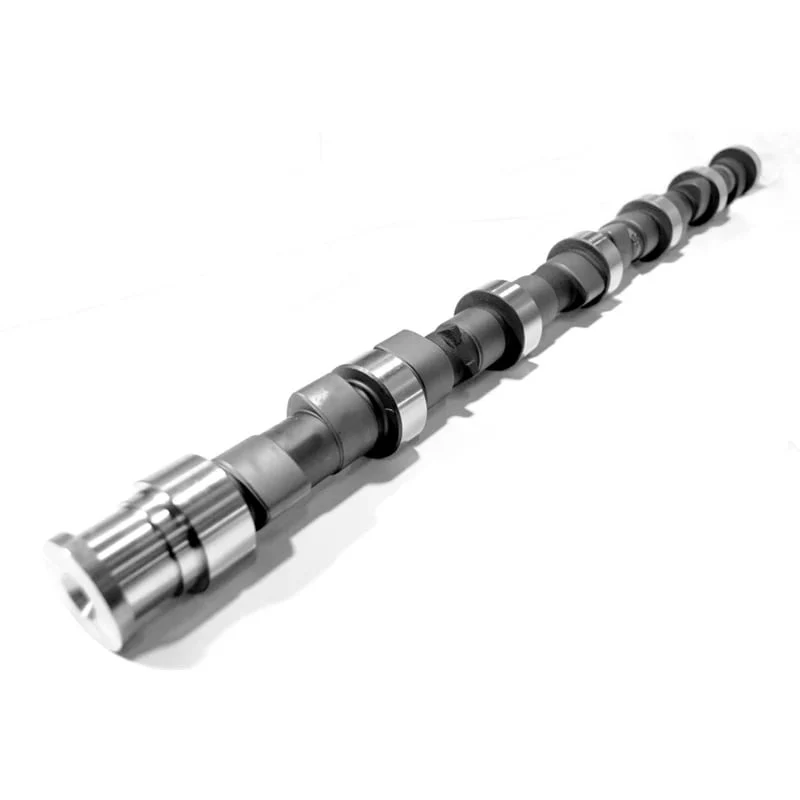
Hamilton Cams 188/220 Street / Race Cast Cam 89-18 Dodge 5.9L / 6.7L Cummins
Hamilton Cams 188/220 Street / Race Cast Cam 89-18 Dodge 5.9L / 6.7L Cummins
If you're looking to broaden your power band and make better use of the larger turbo(s) you've installed, nothing stands up to the Hamilton 188-220 drop in cam.
This cam has outperformed any cam Hamilton has tested it against to date, from idle to 4,200 rpm. It is also the largest drop-in cam that they build. This cam will help to eliminate any turbo lag that is created from running larger turbos, and makes the truck significantly more streetable.
CAST IRON VS STEEL CAMSHAFT COMPARISON:
When it comes to valvetrain performance and long-term reliability, steel camshafts offer clear advantages over traditional cast iron designs. Steel is significantly stronger and more resistant to cracking, flexing, and journal wear under high-load conditions, making it ideal for engines running heavier valve springs, higher RPM, increased boost, or elevated cylinder pressures. Unlike cast iron, which can be brittle and more prone to wear or failure in demanding applications, steel maintains its structural integrity and precise lobe shape over time. This added rigidity helps maintain accurate valve timing under stress, improving consistency, efficiency, and overall durability. Whether you’re towing heavy, racing, or building a high-performance daily driver, a steel camshaft provides the strength and longevity needed to protect your investment and keep your engine performing at its best.
For use with 62mm or larger single turbos or larger twins. Install intake on a 99 centerline, performance springs and pushrods are recommended. If you have had your head or block surfaced, you need to verify piston to valve clearance.
For it to be "drop in" on a 12v you will need no more than .025" piston protrusion and at least .055" valve face depth with a standard head gasket and a 99 intake centerline. On a 24v you will need no more than .025" piston protrusion and at least .038" valve face depth with a standard gasket. If you do not meet the minimum requirements for piston to valve clearance, don't worry, you can still run an oversize headgasket or cut valve reliefs.
Product Information
Product Information
Shipping & Returns
Shipping & Returns
Description
If you're looking to broaden your power band and make better use of the larger turbo(s) you've installed, nothing stands up to the Hamilton 188-220 drop in cam.
This cam has outperformed any cam Hamilton has tested it against to date, from idle to 4,200 rpm. It is also the largest drop-in cam that they build. This cam will help to eliminate any turbo lag that is created from running larger turbos, and makes the truck significantly more streetable.
CAST IRON VS STEEL CAMSHAFT COMPARISON:
When it comes to valvetrain performance and long-term reliability, steel camshafts offer clear advantages over traditional cast iron designs. Steel is significantly stronger and more resistant to cracking, flexing, and journal wear under high-load conditions, making it ideal for engines running heavier valve springs, higher RPM, increased boost, or elevated cylinder pressures. Unlike cast iron, which can be brittle and more prone to wear or failure in demanding applications, steel maintains its structural integrity and precise lobe shape over time. This added rigidity helps maintain accurate valve timing under stress, improving consistency, efficiency, and overall durability. Whether you’re towing heavy, racing, or building a high-performance daily driver, a steel camshaft provides the strength and longevity needed to protect your investment and keep your engine performing at its best.
For use with 62mm or larger single turbos or larger twins. Install intake on a 99 centerline, performance springs and pushrods are recommended. If you have had your head or block surfaced, you need to verify piston to valve clearance.
For it to be "drop in" on a 12v you will need no more than .025" piston protrusion and at least .055" valve face depth with a standard head gasket and a 99 intake centerline. On a 24v you will need no more than .025" piston protrusion and at least .038" valve face depth with a standard gasket. If you do not meet the minimum requirements for piston to valve clearance, don't worry, you can still run an oversize headgasket or cut valve reliefs.