Duramax Tuner SPADE Preloaded Single Tune Tuning Device 11-16 6.6L GM Duramax LML
What do you use your truck for? If you're like most, you probably use it for towing, hauling, regular driving, and even more. So, why not add a specific tuning that fits what you need? The SPADE delivers just that! Choose from a list of custom EFILive Tunes that can unleash your engine and get the power level you need from your Duramax!
The SPADE series (Standalone Programming And Diagnostic Equipment) delivers the highest quality tunes on the market available in a simple to use OBD style flash tool. The tunes represent the best in driveability, reliability, and power. The SPADE system ships preloaded with proven and reliable tunes that's ready to plug in and deliver power for your Duramax, no matter what you specifically use your truck for.
In order to fully optimize your truck's potential with its newfound power, we recommend also upgrading with custom TCM tuning. This tuning is specifically designed to be used with the upgraded ECM tuning for optimum shift points and torque converter lock-up.
SELECT YOUR TUNE / POWER LEVEL:
- Heavy Tow (+40 rwhp / 72 ft-lbs.): A tune designed for heavy towing use. The goal with this tune is to give you as much extra power and torque as possible, while keeping the powertrain safe for towing at max capacity. Further, it is calibrated around sustained EGT and torque converter clutch capacity.
- Light Tow (+55 rwhp / +99 ft-lbs.): A tune designed for light towing use (8K lb trailer and lighter). The goal with this tune is to give you as much extra power and torque as capable, while keeping the powertrain safe for towing at light and medium capacity. Further, it is calibrated around sustained EGT and torque converter clutch capacity at these load levels.
- Street (+110 rwhp / 198 ft-lbs.): A tune designed for daily driving, and great mileage. The goal with this tune is to give you a tune that's fun to drive unloaded every day. Improved throttle response, good low end feel and crisp shifts. This tune offers a balance of fun and mileage with long term driveline and emissions system reliability.
- Sport (+135 rwhp / 243 ft-lbs.): A significant bump in power and torque. It feels like a totally different truck at this time. This tune will put you just shy of 532rwhp and 1000ft-lbs. We're talking about a truck that's a lot of fun to drive and a surprise for most anything you'll see at a stoplight. We recommend not exceeding this power level for long term health on un-modified transmission or stock clutch (manual trans).
FREQUENTLY ASKED QUESTIONS:
- How often does the truck go into regen? Our experience has been that there are 2 common triggers for regen. The truck will initiate regen once it reaches 44 grams of soot in the trap or travels ~700 miles since the end of the last regen. Whichever of these events occur first will start a regen. The regen seems to last until the soot load goes below ~10 grams or so and the driving conditions no long promote regen.
- How long does it take to regen? Our test trucks average about 1 mile per gram of soot. So if the DPF is at 44 grams, and regens down to 5, it generally takes about 40 miles. Of course it'll take longer if the cycle is interrupted.
- How quickly does soot accumulate? It depends on usage. On the highway, it may be 1 gram every 25-30 miles. Mixed driving might be closer to 20 miles, and of course on the dyno things move a little faster. The weird thing is that the counter jumps quickly between 1-10 grams (maybe one gram per mile), counts slower from 10-19 grams (10 miles/gram), and then seems to count from 20-up much slower (20-30 miles/gram)
- How much extra fuel does regen take? My best guess comes from the mileage adjustment I see under steady state operation. For instance. My trip this weekend averaged 19.7 MPG mixed over 700 miles. The truck entered regen at 700 and regen-ed for 40 miles. At the end of regen the DIC showed 19.2 MPG. If I'd done the 740 mile trip without regen at 19.7 MPG I would have used 37.56 gallons. At 19.2 MPG, I used 38.54 gallons - a difference of about a gallon or 2.6% more fuel.
- Does tuning affect regen frequency? Of course it does. The tune needs to be clean for the regen frequency to be kept in check. Our tunes are as clean or cleaner than stock. This 515HP tune has managed 700 miles between regens during road tests. Even driving the truck aggressively seems to have very little affect on the soot counter. The early tunes I tested on dyno seemed to load the soot trap very quickly on the higher HP settings (superchips/HS/Hypertech). If driven reasonably, they intervals weren't noticeably longer - but if hot-rodded you could expect the soot counter to move quickly.
- What kind of Mileage can I expect? Mixed driving can mean many different things to different people. With that said, a single wheel truck can generally manage 16-18 MPG mixed on stock tires with a reasonable driver. On the highway, MPG numbers as high as 23 MPG can be achieved at cruising speeds near 60MPH. As speed increases past 70 MPH, mileage closer to 20/21 is the norm. Colder temps will hurt mileage, especially if the truck is short-tripped.
Product Information
Product Information
Shipping & Returns
Shipping & Returns
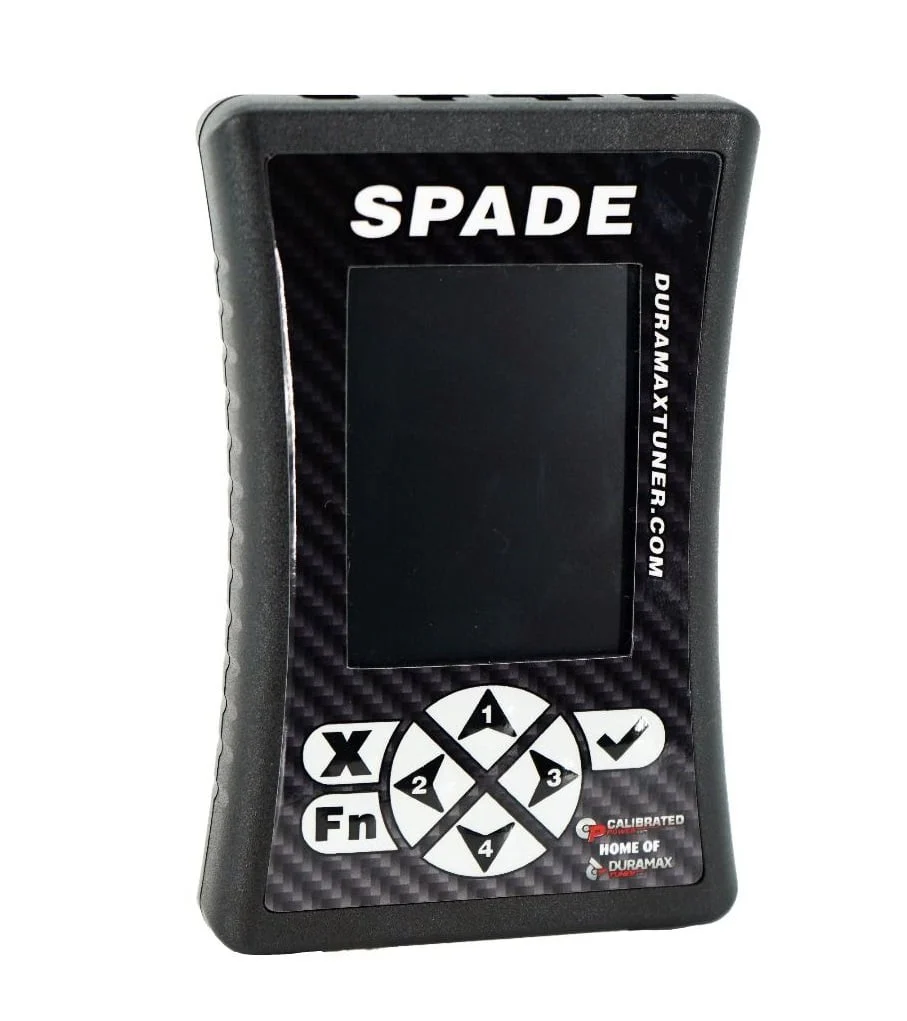
Duramax Tuner SPADE Preloaded Single Tune Tuning Device 11-16 6.6L GM Duramax LML
Duramax Tuner SPADE Preloaded Single Tune Tuning Device 11-16 6.6L GM Duramax LML
What do you use your truck for? If you're like most, you probably use it for towing, hauling, regular driving, and even more. So, why not add a specific tuning that fits what you need? The SPADE delivers just that! Choose from a list of custom EFILive Tunes that can unleash your engine and get the power level you need from your Duramax!
The SPADE series (Standalone Programming And Diagnostic Equipment) delivers the highest quality tunes on the market available in a simple to use OBD style flash tool. The tunes represent the best in driveability, reliability, and power. The SPADE system ships preloaded with proven and reliable tunes that's ready to plug in and deliver power for your Duramax, no matter what you specifically use your truck for.
In order to fully optimize your truck's potential with its newfound power, we recommend also upgrading with custom TCM tuning. This tuning is specifically designed to be used with the upgraded ECM tuning for optimum shift points and torque converter lock-up.
SELECT YOUR TUNE / POWER LEVEL:
- Heavy Tow (+40 rwhp / 72 ft-lbs.): A tune designed for heavy towing use. The goal with this tune is to give you as much extra power and torque as possible, while keeping the powertrain safe for towing at max capacity. Further, it is calibrated around sustained EGT and torque converter clutch capacity.
- Light Tow (+55 rwhp / +99 ft-lbs.): A tune designed for light towing use (8K lb trailer and lighter). The goal with this tune is to give you as much extra power and torque as capable, while keeping the powertrain safe for towing at light and medium capacity. Further, it is calibrated around sustained EGT and torque converter clutch capacity at these load levels.
- Street (+110 rwhp / 198 ft-lbs.): A tune designed for daily driving, and great mileage. The goal with this tune is to give you a tune that's fun to drive unloaded every day. Improved throttle response, good low end feel and crisp shifts. This tune offers a balance of fun and mileage with long term driveline and emissions system reliability.
- Sport (+135 rwhp / 243 ft-lbs.): A significant bump in power and torque. It feels like a totally different truck at this time. This tune will put you just shy of 532rwhp and 1000ft-lbs. We're talking about a truck that's a lot of fun to drive and a surprise for most anything you'll see at a stoplight. We recommend not exceeding this power level for long term health on un-modified transmission or stock clutch (manual trans).
FREQUENTLY ASKED QUESTIONS:
- How often does the truck go into regen? Our experience has been that there are 2 common triggers for regen. The truck will initiate regen once it reaches 44 grams of soot in the trap or travels ~700 miles since the end of the last regen. Whichever of these events occur first will start a regen. The regen seems to last until the soot load goes below ~10 grams or so and the driving conditions no long promote regen.
- How long does it take to regen? Our test trucks average about 1 mile per gram of soot. So if the DPF is at 44 grams, and regens down to 5, it generally takes about 40 miles. Of course it'll take longer if the cycle is interrupted.
- How quickly does soot accumulate? It depends on usage. On the highway, it may be 1 gram every 25-30 miles. Mixed driving might be closer to 20 miles, and of course on the dyno things move a little faster. The weird thing is that the counter jumps quickly between 1-10 grams (maybe one gram per mile), counts slower from 10-19 grams (10 miles/gram), and then seems to count from 20-up much slower (20-30 miles/gram)
- How much extra fuel does regen take? My best guess comes from the mileage adjustment I see under steady state operation. For instance. My trip this weekend averaged 19.7 MPG mixed over 700 miles. The truck entered regen at 700 and regen-ed for 40 miles. At the end of regen the DIC showed 19.2 MPG. If I'd done the 740 mile trip without regen at 19.7 MPG I would have used 37.56 gallons. At 19.2 MPG, I used 38.54 gallons - a difference of about a gallon or 2.6% more fuel.
- Does tuning affect regen frequency? Of course it does. The tune needs to be clean for the regen frequency to be kept in check. Our tunes are as clean or cleaner than stock. This 515HP tune has managed 700 miles between regens during road tests. Even driving the truck aggressively seems to have very little affect on the soot counter. The early tunes I tested on dyno seemed to load the soot trap very quickly on the higher HP settings (superchips/HS/Hypertech). If driven reasonably, they intervals weren't noticeably longer - but if hot-rodded you could expect the soot counter to move quickly.
- What kind of Mileage can I expect? Mixed driving can mean many different things to different people. With that said, a single wheel truck can generally manage 16-18 MPG mixed on stock tires with a reasonable driver. On the highway, MPG numbers as high as 23 MPG can be achieved at cruising speeds near 60MPH. As speed increases past 70 MPH, mileage closer to 20/21 is the norm. Colder temps will hurt mileage, especially if the truck is short-tripped.
Product Information
Product Information
Shipping & Returns
Shipping & Returns
Description
What do you use your truck for? If you're like most, you probably use it for towing, hauling, regular driving, and even more. So, why not add a specific tuning that fits what you need? The SPADE delivers just that! Choose from a list of custom EFILive Tunes that can unleash your engine and get the power level you need from your Duramax!
The SPADE series (Standalone Programming And Diagnostic Equipment) delivers the highest quality tunes on the market available in a simple to use OBD style flash tool. The tunes represent the best in driveability, reliability, and power. The SPADE system ships preloaded with proven and reliable tunes that's ready to plug in and deliver power for your Duramax, no matter what you specifically use your truck for.
In order to fully optimize your truck's potential with its newfound power, we recommend also upgrading with custom TCM tuning. This tuning is specifically designed to be used with the upgraded ECM tuning for optimum shift points and torque converter lock-up.
SELECT YOUR TUNE / POWER LEVEL:
- Heavy Tow (+40 rwhp / 72 ft-lbs.): A tune designed for heavy towing use. The goal with this tune is to give you as much extra power and torque as possible, while keeping the powertrain safe for towing at max capacity. Further, it is calibrated around sustained EGT and torque converter clutch capacity.
- Light Tow (+55 rwhp / +99 ft-lbs.): A tune designed for light towing use (8K lb trailer and lighter). The goal with this tune is to give you as much extra power and torque as capable, while keeping the powertrain safe for towing at light and medium capacity. Further, it is calibrated around sustained EGT and torque converter clutch capacity at these load levels.
- Street (+110 rwhp / 198 ft-lbs.): A tune designed for daily driving, and great mileage. The goal with this tune is to give you a tune that's fun to drive unloaded every day. Improved throttle response, good low end feel and crisp shifts. This tune offers a balance of fun and mileage with long term driveline and emissions system reliability.
- Sport (+135 rwhp / 243 ft-lbs.): A significant bump in power and torque. It feels like a totally different truck at this time. This tune will put you just shy of 532rwhp and 1000ft-lbs. We're talking about a truck that's a lot of fun to drive and a surprise for most anything you'll see at a stoplight. We recommend not exceeding this power level for long term health on un-modified transmission or stock clutch (manual trans).
FREQUENTLY ASKED QUESTIONS:
- How often does the truck go into regen? Our experience has been that there are 2 common triggers for regen. The truck will initiate regen once it reaches 44 grams of soot in the trap or travels ~700 miles since the end of the last regen. Whichever of these events occur first will start a regen. The regen seems to last until the soot load goes below ~10 grams or so and the driving conditions no long promote regen.
- How long does it take to regen? Our test trucks average about 1 mile per gram of soot. So if the DPF is at 44 grams, and regens down to 5, it generally takes about 40 miles. Of course it'll take longer if the cycle is interrupted.
- How quickly does soot accumulate? It depends on usage. On the highway, it may be 1 gram every 25-30 miles. Mixed driving might be closer to 20 miles, and of course on the dyno things move a little faster. The weird thing is that the counter jumps quickly between 1-10 grams (maybe one gram per mile), counts slower from 10-19 grams (10 miles/gram), and then seems to count from 20-up much slower (20-30 miles/gram)
- How much extra fuel does regen take? My best guess comes from the mileage adjustment I see under steady state operation. For instance. My trip this weekend averaged 19.7 MPG mixed over 700 miles. The truck entered regen at 700 and regen-ed for 40 miles. At the end of regen the DIC showed 19.2 MPG. If I'd done the 740 mile trip without regen at 19.7 MPG I would have used 37.56 gallons. At 19.2 MPG, I used 38.54 gallons - a difference of about a gallon or 2.6% more fuel.
- Does tuning affect regen frequency? Of course it does. The tune needs to be clean for the regen frequency to be kept in check. Our tunes are as clean or cleaner than stock. This 515HP tune has managed 700 miles between regens during road tests. Even driving the truck aggressively seems to have very little affect on the soot counter. The early tunes I tested on dyno seemed to load the soot trap very quickly on the higher HP settings (superchips/HS/Hypertech). If driven reasonably, they intervals weren't noticeably longer - but if hot-rodded you could expect the soot counter to move quickly.
- What kind of Mileage can I expect? Mixed driving can mean many different things to different people. With that said, a single wheel truck can generally manage 16-18 MPG mixed on stock tires with a reasonable driver. On the highway, MPG numbers as high as 23 MPG can be achieved at cruising speeds near 60MPH. As speed increases past 70 MPH, mileage closer to 20/21 is the norm. Colder temps will hurt mileage, especially if the truck is short-tripped.